

Ryan Brunton is the Head of Social Sciences and Lead for Digital at Ditton Park Academy.
Introduction
Ditton Park Academy trialled using Running Paper in April 2025. The obvious selling point was the time saved for teachers, which will be a point discussed later. The actual first revelation was not just the time that it could save but the high-quality feedback for each question asked, with supportive next steps personalised to each individual.
In September 2025, the school decided to invest in the platform as part of the school’s vision to improve outcomes in our students. In hindsight and as advice for other schools, it would be advisable to give at least half an inset day for CPD on how to use the platform. At Ditton Park, we used video tutorials and drop-in sessions throughout the first term. After Christmas, following mocks we had a more formal 1 hour CPD for all. This gave teachers a head start and enabled collaborative CPDs to build high quality assessments ready for Running Paper to grade and give feedback.
Assessment, marking and feedback prior to Running Paper
Prior to Running Paper, assessment looked much the same as in any other school, with in-class formative assessment through questioning and checking and summative assessments for data capture occurring four times a year. The issues surrounding formative assessment is it can be difficult to fully gauge understanding and misconceptions. Summative assessment which is designed to grab data once every 8-10 weeks. The issue at all schools is the timing, the test is sat and then up to two weeks’ worth of marking, feedback and analysis is done. The result at Ditton Park is a confusing report sent home which shows a level/grade given by teachers.
How has Running Paper changed the assessment process at Ditton Park?
In the real life setting of the classroom, we have found that students are now able to complete more questions, more skills, more interventions and receive feedback much faster than before while fresh in their memories. Students work a lot harder, as the feedback and assessments can be shared with parents, we have found during parent’s evenings it’s been commented they have liked being able to support and encourage their child from the feedback. Parents now have another layer of information and communication of how their child is progressing but in a more qualitative way.
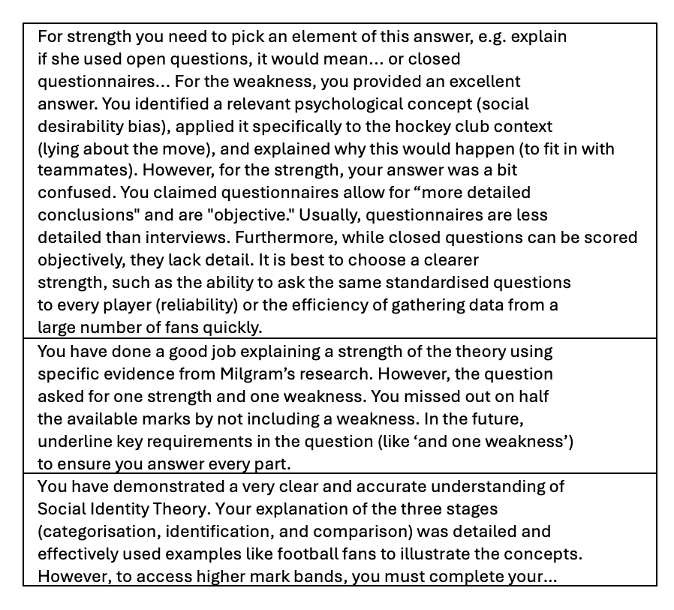
We have seen fantastic teacher use of printing the feedback in English lessons where students then engage with the feedback and make amendments to improve their outcomes. The school has adopted many different uses of Running Paper from cold write and hot write assessments, skill tests, knowledge tests, formal assessments and homework tasks.
Below is a basic example adding a blank box to the feedback and getting student to ‘react’ to the feedback.
Quality assurance
One crucial element of Running Paper has been the quality of assurance of the marking, the AI feedback is marked by three separate AI systems, two Gemini models and a GPT model and when confidence of accuracy is low it is flagged for teachers to check over. This assures that teachers still play an active role in the assessment procedure. It is also a very quick process in checking, editing and typing some extra feedback. The accuracy can be an issue for certain subjects and question types/lengths, sometimes over marking. This can be overcome when knowing how to set up assessments, we found adding marking guidance when setting up the assessment and inputting a bit more criteria make the marking more accurate.
Team and department benefits
Regarding teams and departments, like many schools there can be non-specialist staff in a department or long-term absences, Running Paper has allowed the class to still receive high-quality feedback. In departments with large teams, we now see a more consistent approach to the accuracy of marking and feedback for all. Another benefit has been workload regarding making the assessment, one person can make an assessment which can then be shared with all those in the department to use on their students.
A concern from some departments has been printing budgets and paper wastage, there are ways of utilising Running Paper to better save paper, one way is to print double sided and for certain subjects like science you can print in an A5 format (two per page, double sided), you will then have to guillotine the papers into A5 as Running Paper cannot scan a page with two QR codes on.
Impact so far
Many people will use the phrase; Running Paper saves teachers’ time. I agree, yes it will, but the nature of teaching does not mean they can now relax and sit in the staff room drinking coffee. I have found it is the actual opposite, Running Paper has just allowed me to do more. I can now contact parents more, do more one-to-one support and using the feedback to engage next steps.
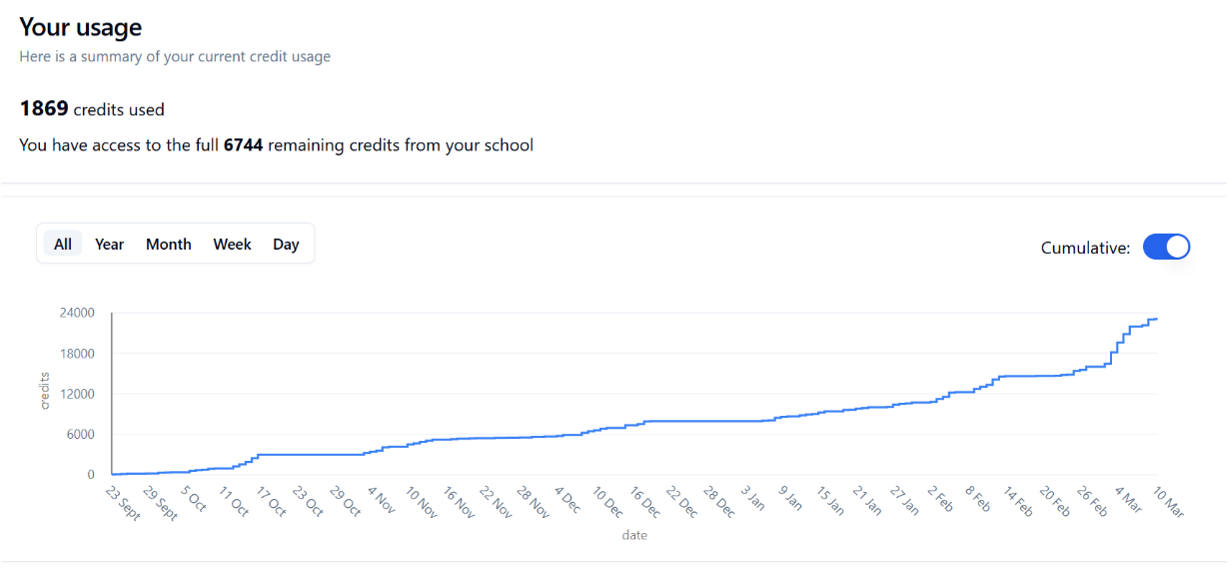
Since the December mocks, we have set an ambitious target across the whole school of 5,000 interventions in 10 teaching weeks, so far after 3 school weeks we are currently at 3611 interventions.
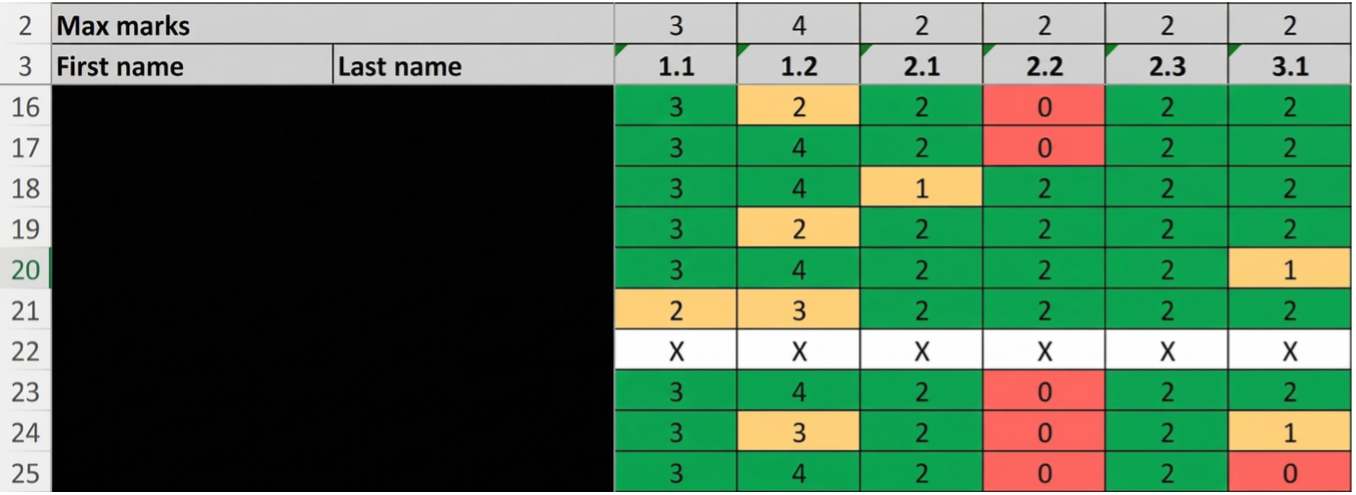
It’s important to know that at Ditton Park, we do not just send the feedback and leave it at that point, to get the most impact, we make sure we set tasks getting students to engage with the feedback and to take the next steps to improvement. The QLA tool will generate ‘red, amber and green’ topics to support teachers’ next steps and topics/skills that need development. Moreover, the QLA and the whole class feedback report inform the teachers of next steps and strategies to boost student outcomes.
Progress tracking
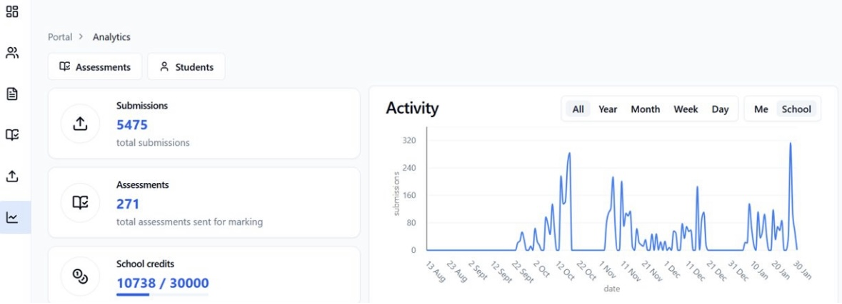
Thursday 12th February - Day of the CPD
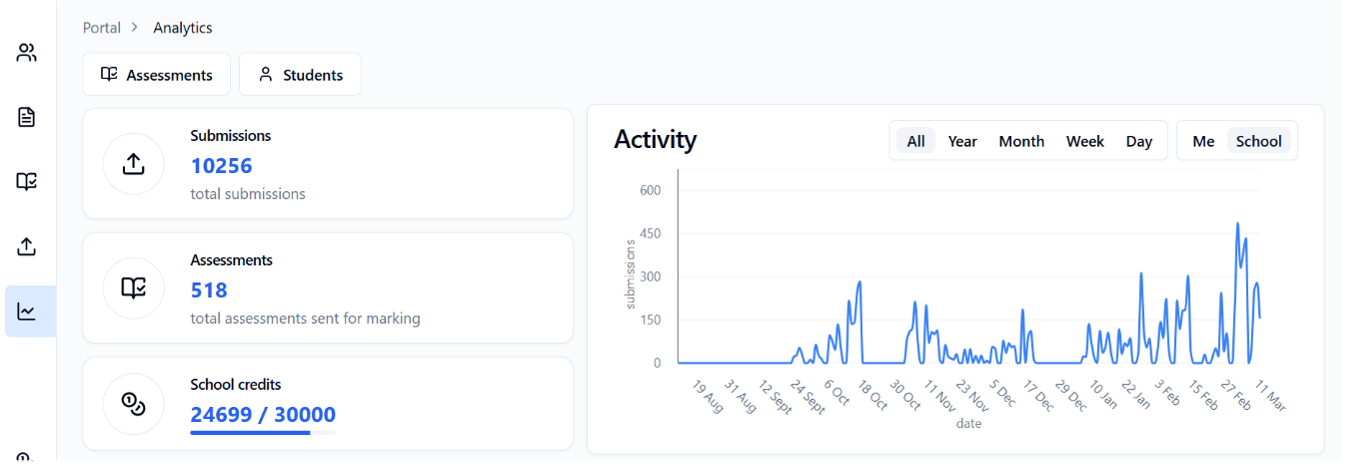
Thursday 10th of March (5 weeks after CPD, 5 school weeks before exams)
Next steps
In summary, it is our belief that Running Paper offers great value for the whole school, based on the impact it can have for staff, students and parental engagement.
The platform should come with school goals:
- Improving communication and support from home, thinking about reports and building qualitative details of pupil’s progress.
- Saving teachers time and improving work life balance.
- Allowing students to complete more tasks with fast and personalised feedback.
- To get the most out of the platform, provide CPD at the start of term.
- Updated CPD midway through academic year.
- Each department to have a champion who becomes the ‘expert’ in supporting the team.
- Have whole school and departmental targets of expected assignments.
- School policy should direct staff, that they must check for low confidence marking.
- Still do hand marked assessment and show students the human side of support and next steps after the feedback is given.
- The more interventions a student completes we should be confident there will be a positive impact on results.
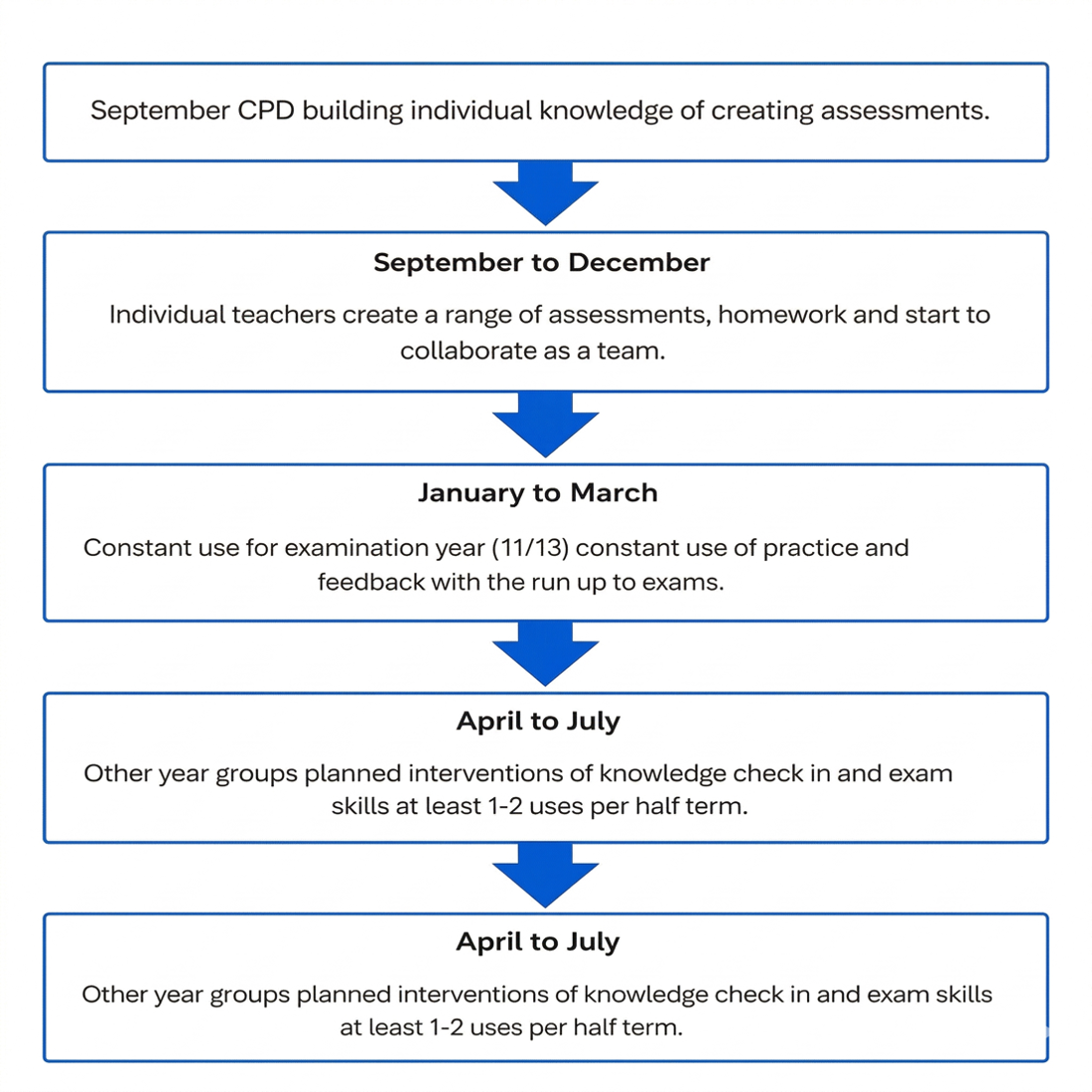
Academic year strategic use for exam year groups
Conclusion
Overall, this is one of the most exciting developments in education for a long time which can make a measurable difference, and I have found the company owners to be supportive in helping the school get the most out of the platform.