By Alex McNeill, Associate Assistant Headteacher and Science Lead, St John Bosco Arts College, Liverpool
Key outcomes:
- Evidence teachers can act on. Running Paper supports the College’s assessment strategy by bringing test results and evidence together quickly, and enabling teachers to act on the gaps while the learning is still fresh.
- Almost four hours saved per assessment. Based on a typical class of 30 pupils and covering the administration, marking and feedback of each assessment. This time now goes into checking the quality of feedback and planning the next teaching step.
- Immediate question level analysis. Teachers can see patterns across a class, locate questions pupils left unanswered and examine how different groups performed within minutes rather than days or weeks.
Marking an assessment is only useful if we can act on what it tells us.
At St John Bosco Arts College, a Catholic comprehensive school in Croxteth, Liverpool, the time needed to mark papers and produce question level analysis (QLA) often meant that the clearest picture of pupils’ understanding arrived days or even weeks after they had completed the work. We introduced Running Paper to shorten that gap.
After a year of use, the biggest change is the time we can devote to identifying misconceptions, reteaching them and checking whether pupils have improved.
Starting small and building confidence
We began in science with short Key Stage 4 assessments. The team from Running Paper demonstrated the platform to the department and a small group of staff led the first trials. As confidence grew, we used it for short assessments across key stages and then for Key Stage 4 mock examinations. Colleagues gave regular feedback about the marking, feedback reports and practical steps involved in running assessments directly to the Running Paper team. That experience informed both our routines and changes to the platform.
Maths followed after six months, and English and Religious Education are also now using Running Paper for their assessments.
This gradual approach mattered. Staff could see the output on familiar questions, check the marks against their own judgement, complete moderation and establish where a teacher needed to review the result. It also allowed us to solve the less visible logistical requirements, such as printing, sorting and scanning papers, before scaling up.
“After a year of use, the biggest change is the time we can devote to identifying misconceptions, reteaching them and checking whether pupils have improved.”
QLA in minutes, not days
Previously, detailed QLA was largely reserved for mock examinations because producing it for every assessment took too long. Running Paper makes it available quickly, including for short assessments and Key Stage 3.
Teachers can see patterns across a class, locate questions pupils left unanswered, and examine how different groups, including pupils eligible for Pupil Premium (PP) and pupils with SEND, performed. The reports also highlight common misconceptions that are easy to miss when marking a large set of papers one at a time.
Before and after: the impact on teaching and learning
| Before | Now |
|---|---|
| Teachers spent hours marking | Teachers spend time checking and improving feedback |
| QLA produced days later | QLA available within minutes |
| Reteaching often covered whole topics | Reteaching targets precise misconceptions |
| Curriculum discussions used generalised data | Curriculum discussions use question level evidence |
| Feedback was often delayed | Personalised feedback is available after marking |
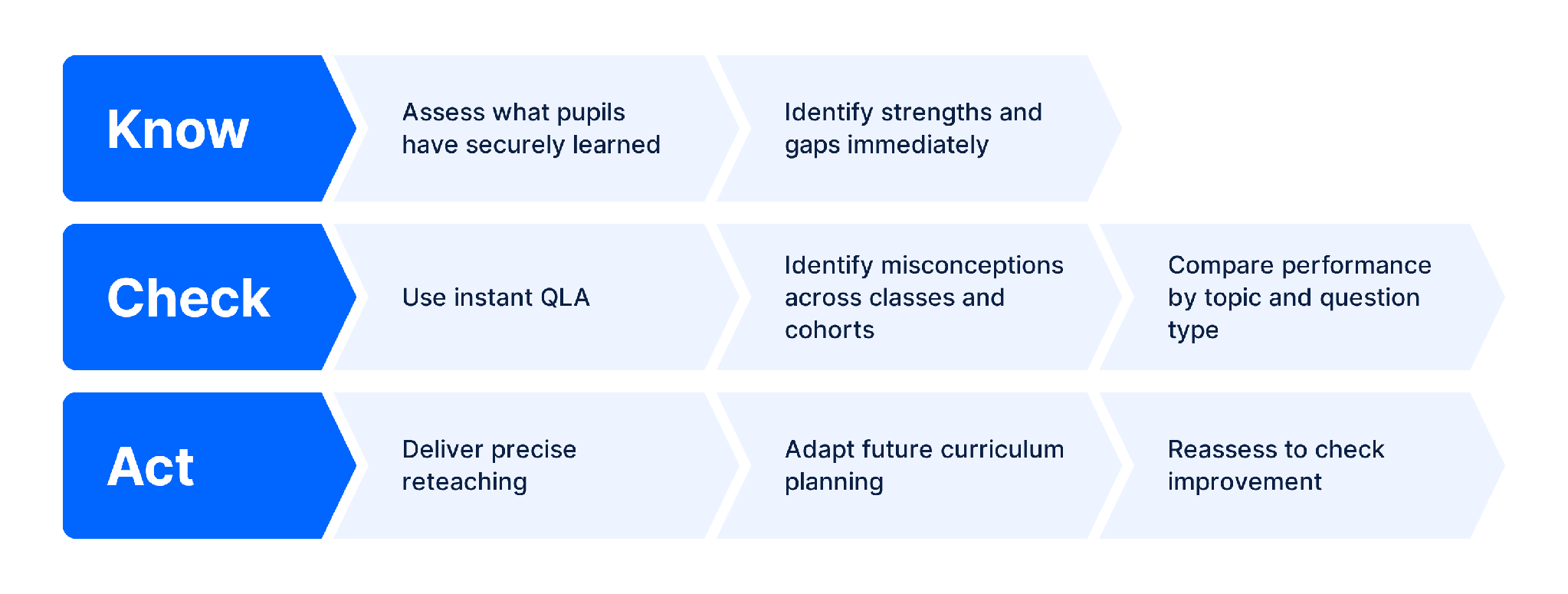
Know Check Act: our three-step assessment strategy
Running Paper enables this assessment strategy by bringing the evidence together quickly.
Our response now follows a simple cycle: assess what pupils know, check the evidence and act on the gaps.
After a large assessment, we identify the questions pupils most commonly underperformed on. A low mark on one question does not automatically mean that an entire topic needs reteaching. This is where diagnostic assessment comes in. We write short diagnostic questions to find out which piece of core knowledge or reasoning caused the difficulty.
Once we have isolated the misunderstanding, teachers address it explicitly and revisit the learning in the next short assessment.
With short assessments, teachers reteach the areas of challenge and use these topics in their starter activities until pupils are competent. The three least-well-answered questions will appear in the subsequent short assessment to reassess whether the reteach cycle has had an impact.
Mapping questions to specification points has made this information more useful for Key Stage 4. It helps us track knowledge over time and have more precise conversations about teaching and curriculum sequence. The software provides the evidence, but the teachers still decide what it means and what pupils need next.
A worked example: from low scores to secure learning
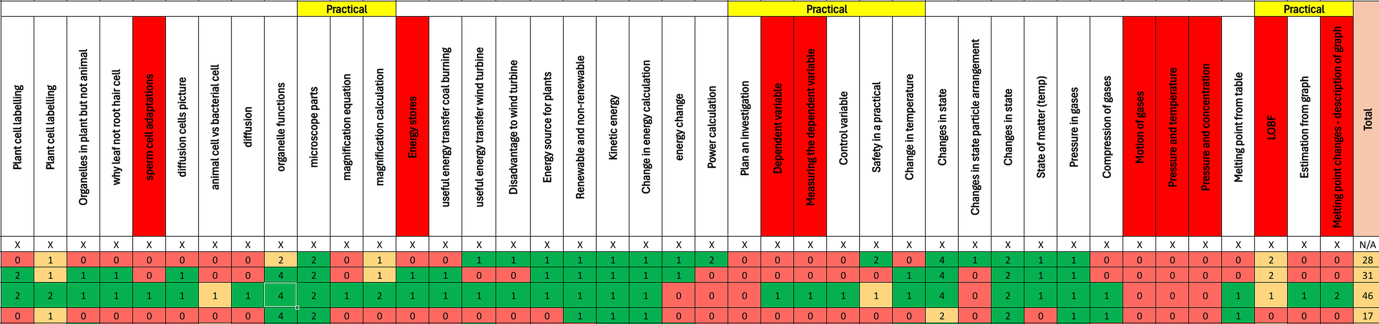
This was the QLA from a summative KS3 assessment. This identified a few areas to work on.
We then planned a diagnostic assessment based on the areas for development:
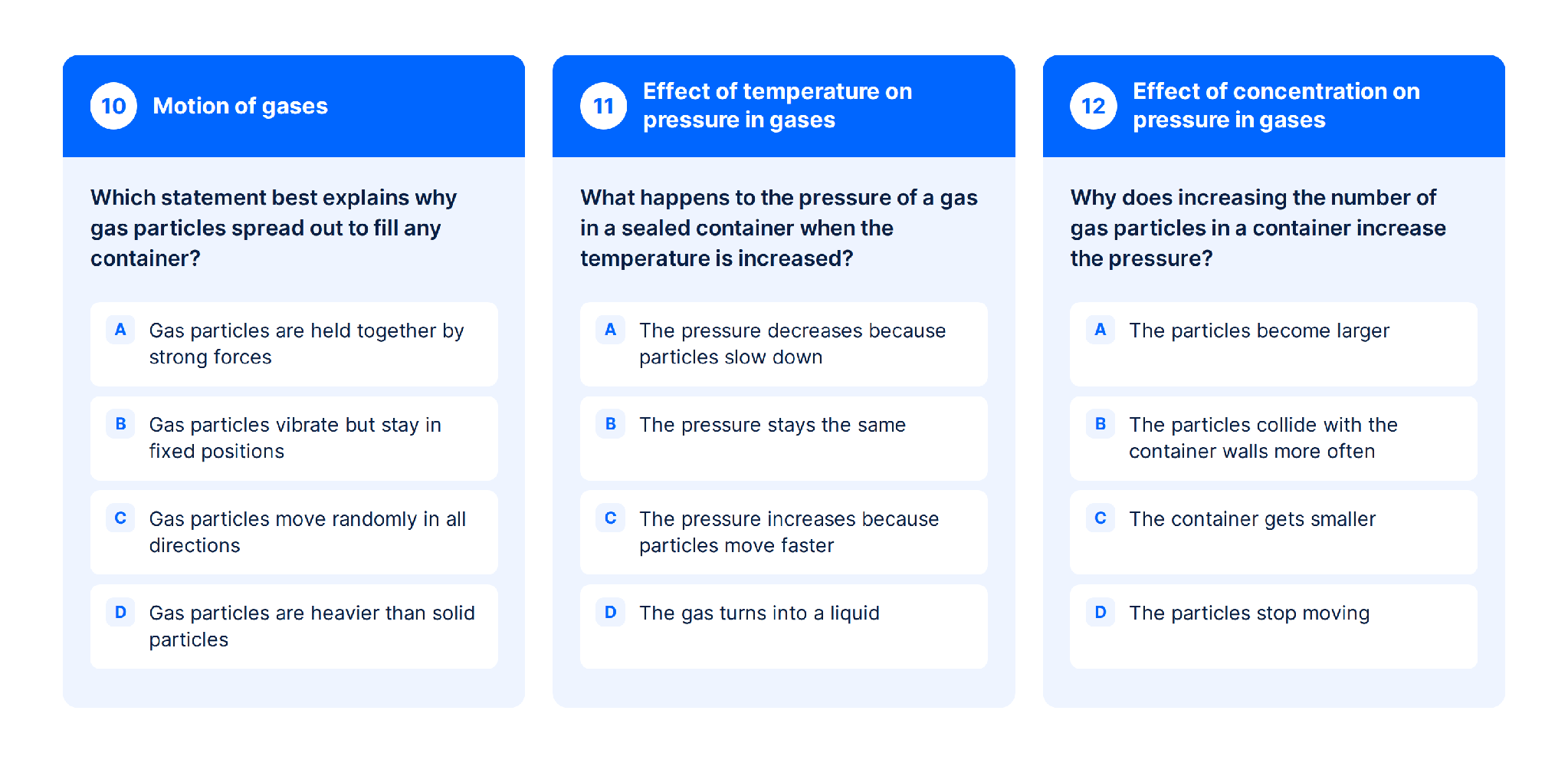
This assessment then identified the key misconceptions and misunderstandings rather than whole topics to reteach. We then produced a reteach lesson and pupils completed practice.
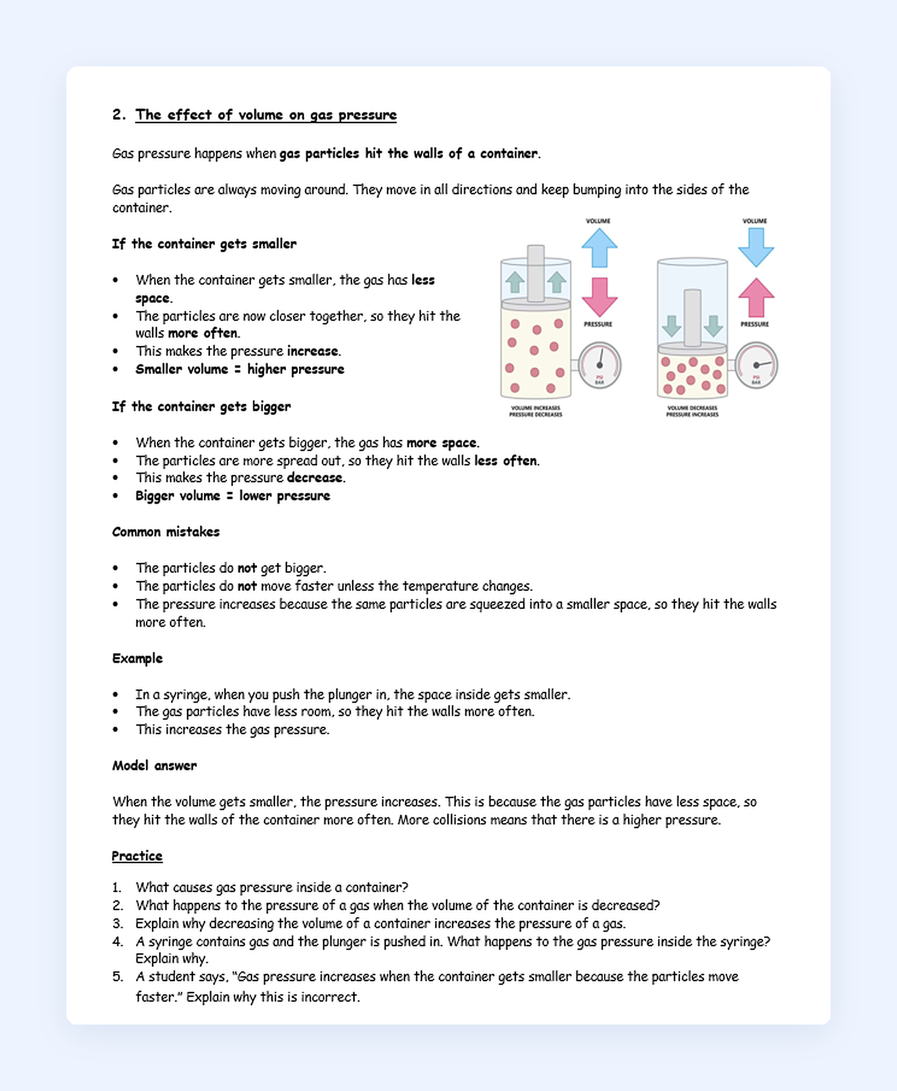
Finally, pupils were reassessed on this in the next assessment in the first three questions:
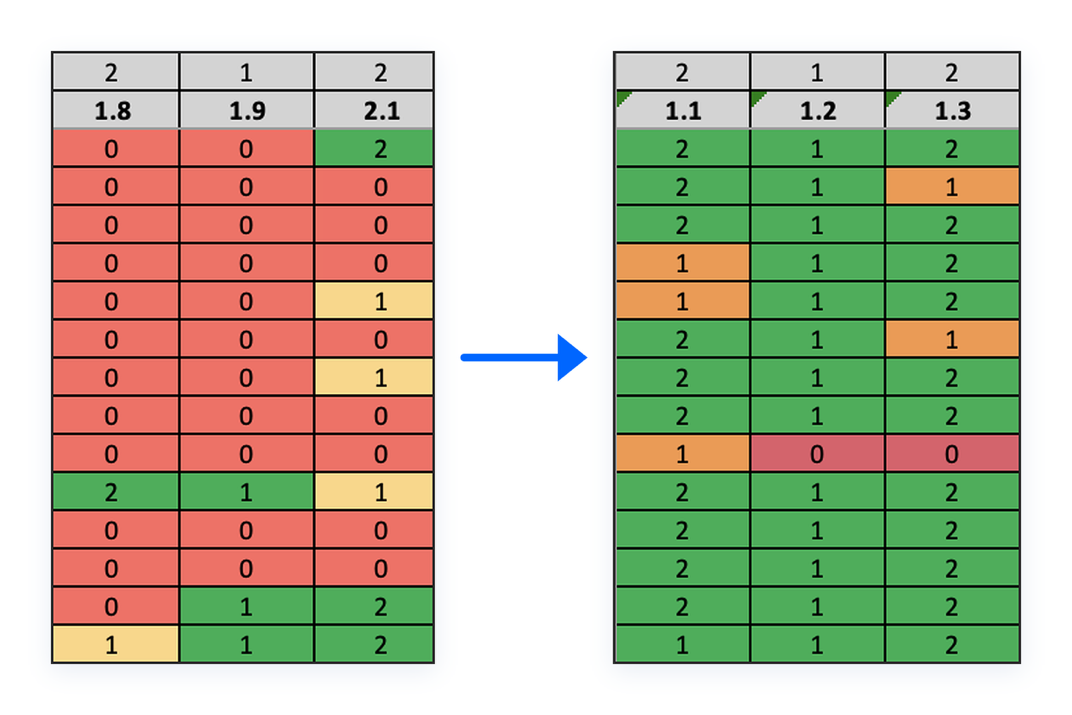
The table on the left shows how pupils performed on the three questions in the original assessment. Most scored no marks. After the diagnostic assessment and reteach, the same content appeared as the first three questions of the next short assessment, shown on the right. Most pupils now achieved full or near-full marks and the pupils who were still struggling were easy to identify for further support.
“The software provides the evidence, but the teachers still decide what it means and what pupils need next.”
How the assessment cycle has improved

How much time does Running Paper save?
Admin for a year group
| Task | Previous process | Running Paper process |
|---|---|---|
| Upload assessment | Not required | About one week before printing (but can be sooner) |
| Print and staple papers | ~1 hour | ~1 hour |
| Sort by seat number | Not required | ~20 minutes |
| Sort completed papers into classes | ~15 minutes | ~10 minutes |
| Year group admin total | ~1 hour 15 minutes | ~1 hour 30 minutes |
Marking and feedback for a class of 30
| Task | Previous process | Running Paper process |
|---|---|---|
| Scan papers | Not required | ~10 minutes |
| Mark and check papers | ~2½ hours | ~1 hour checking flagged questions; system marking within minutes |
| Personalised feedback | ~1 hour | Available after marking |
| QLA | ~1½ hours | Available after marking |
| Class feedback and reteach planning | ~40 minutes | ~20 minutes |
| Total per class of 30 | ~5 hours 40 minutes | ~1 hour 30 minutes |
These are indicative figures from our own workflow, not a universal saving for every school or every paper.
Uploading an assessment in advance, printing, sorting and scanning still take time. The benefit for us is that far less of the cycle is consumed by routine marking and manual analysis. Staff can spend more time checking the quality of feedback and planning the next teaching step. Pupils receive individual feedback while the assessment is still recent enough for it to inform their learning.
What needed work and how we fixed it
The rollout brought challenges in both marking and paper handling. Graphs and extended responses required careful checking, while layout, printing and scanning needed routines that worked at scale.
We worked with the team at Running Paper to improve the process while retaining teacher review of the marks and feedback. The tables below show some challenges we came across and how the team resolved them.
Getting accurate marks and readable feedback
| What we encountered | How we addressed it |
|---|---|
| Assessment layout could split questions across pages or make diagrams unclear. | We send the original PDF to the support team to construct the assessment. |
| Some question types, including graphs, were marked incorrectly across candidates. | We provide a worked example and clarify what earns each mark, then check the affected questions. |
| Pupil feedback could be too long or difficult to read. | We adjust its reading age and edit comments. Full-mark questions no longer need individual feedback. |
| Checking every response took too long. | We review low and medium confidence questions and filter other items when a pattern looks inaccurate. |
| Extended and essay style responses were harder to mark consistently. | We supply the precise mark scheme and relevant exam board commentary, then review the marks. |
The practicalities: printing, scanning and seating
| What we encountered | How we addressed it |
|---|---|
| Stapling individual assessments was time consuming. | We use the printer stapling function to produce each paper as a separate set. |
| Scanning separate classes and papers took time. | The system can recognise mixed classes, different assessments and pages in the wrong order. |
| Names on mock papers meant seat numbers had to be added manually. | We add seat numbers online before printing. |
| The papers lacked a front cover. | We add our usual front cover or a Running Paper cover. |
| The number of scans in one upload was limited by file size. | Sending the scan to a folder in the account permits a larger file. |
“The benefit for us is that far less of the cycle is consumed by routine marking and manual analysis. Staff can spend more time checking the quality of feedback and planning the next teaching step.”
Our plans for the next 12 months
We are building on a strong start. We plan to continue using Running Paper across the core subjects for another 12 months. We will use a hybrid approach in which some end of key concept assessments and mocks are processed through the platform while departments mark others. That balance reflects the volume of assessment and gives us a practical way to judge where the tool adds most value. We will continue working with the team on features such as tracking knowledge directly against specification points.
As a department, we have a focus on AO1 (knowledge and understanding) at KS4. This year, we plan to use the system to complete diagnostic core knowledge assessments weekly in Year 11 to identify what pupils know and where the gaps are. This will be tracked over time and will require class teachers to reteach topics with gaps before reassessment the following week.
It is too early to attribute a change in examination outcomes to the platform alone. What we can say from our experience is that assessment information reaches teachers sooner and in a form they can use more readily. The real test is whether our subsequent reteaching and reassessment help pupils retain and apply more of what they learn.
Running Paper has given us valuable extra time and a stronger level of information to make that work possible.